Silvacane abbey, Sénanque's overlooked sister
Thirty miles south of Avignon, Silvacane abbey unfolds its austere beauty on the banks of the Durance. Less famous than Sénanque or Le Thoronet, this third Provençal Cistercian "sister" captivates with its intact Romanesque church, luminous cloister, and bucolic setting. An off-the-beaten-path detour, ideal before or…
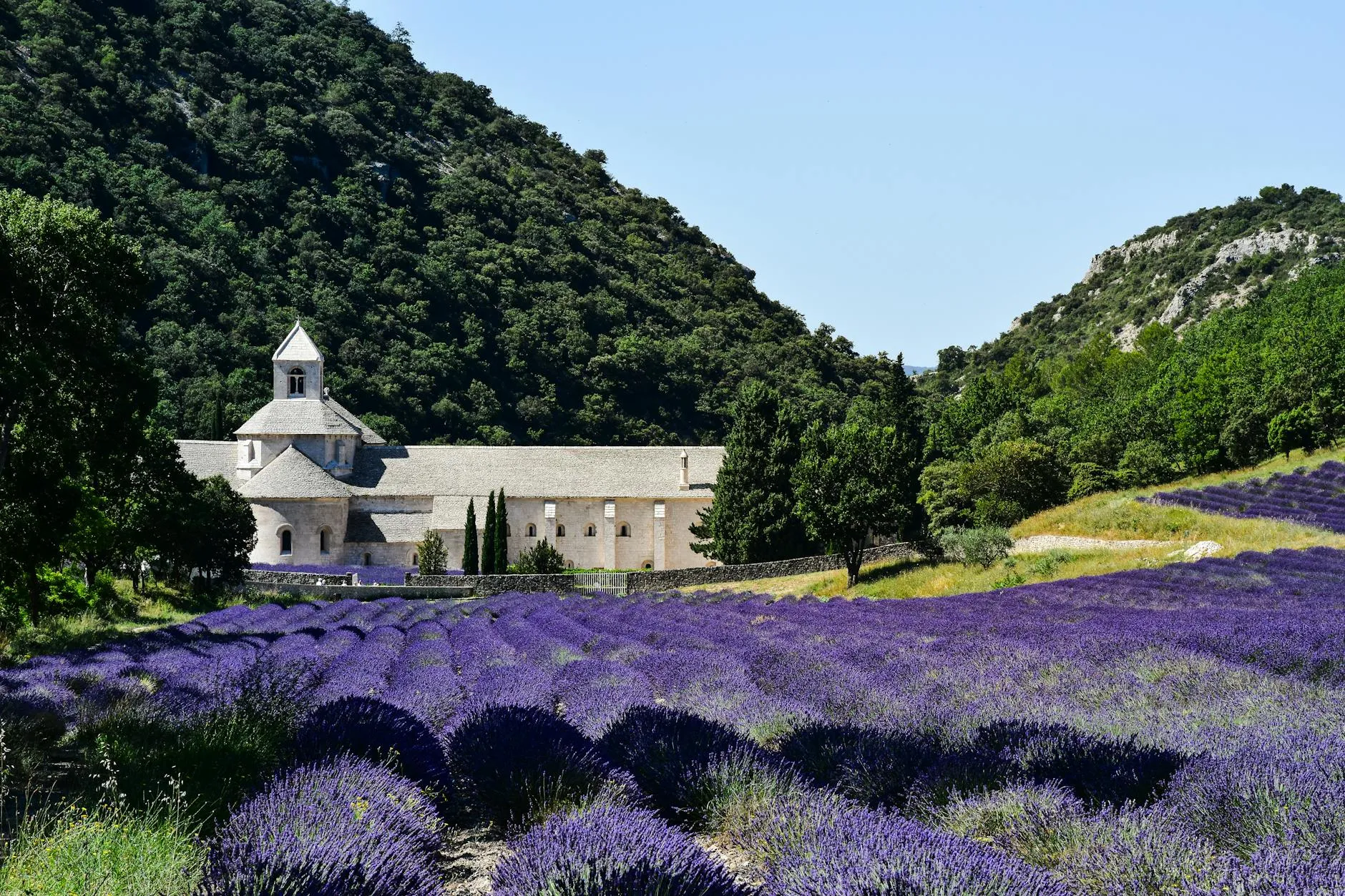
An abbey in Sénanque’s shadow
When Provence’s Cistercian abbeys come up, Sénanque springs to mind — its lavender fields, its postcards, its July queues. Yet Provence counts three 12th-century Cistercian “sisters”: Sénanque (Vaucluse), Le Thoronet (Var), and Silvacane (Bouches-du-Rhône). The last, nestled on the Durance riverbank at La Roque-d’Anthéron, remains the most discreet, the least crowded, and perhaps the most moving for those seeking silence and authenticity. No adjacent lavender field, no overwhelming souvenir shop, just blonde stone, raking light, and the river’s murmur. From our Teinturiers neighborhood apartments in Avignon, Silvacane is 50 minutes away via the A7 and D973 — a drive through the southern Luberon, between orchards and vineyards.
Silvacane means “reed forest” in Provençal (silva cana), a reference to the marshes that bordered the Durance before the monks drained them in the 12th century. Founded in 1144 by monks from Morimond abbey (Champagne), it reached its peak in the 13th century, then declined after the Wars of Religion and the Revolution. Classified as a historic monument in 1840, it was restored in the 20th century and now belongs to the Centre des monuments nationaux. Unlike Sénanque, still inhabited by a monastic community, Silvacane is a heritage site open to the public year-round — and it’s this absence of active religious life that gives it a particular atmosphere, between contemplation and melancholy.
Cistercian architecture: rigor and light
The abbey church, stone vessel
Silvacane’s church, consecrated in 1175, embodies the Cistercian ideal: austerity, harmonious proportions, absence of superfluous ornament. The nave, 125 feet long, comprises three bays vaulted in pointed barrel, supported by massive transverse arches. No sculpted capitals (or almost: a few discreet acanthus leaves), no colored stained glass, just bare stone and light filtered through round-arched bays. The choir, raised three steps, opens onto a hemicycle apse pierced by three windows — a classic arrangement that concentrates the eastern light on the altar.
What strikes immediately is the acoustics. Clap your hands: the echo lasts several seconds, bounces off the vaults, envelops the space. This exceptional resonance makes Silvacane a prized venue for classical music concerts, especially during the La Roque-d’Anthéron international piano festival (mid-July to mid-August). Imagine a Bach or Schubert recital under these Romanesque vaults, by candlelight: the experience borders on the sacred, even for non-believers.
The cloister, heart of monastic life
Silvacane’s cloister, rebuilt in the 13th century after a fire, is one of Provence’s best preserved. Four galleries vaulted in pointed barrel surround a square garden planted with boxwood and lavender (discreet, far from Sénanque’s spectacle). The capitals of the twin columns, sober, present stylized plant motifs — water leaves, fern crosiers — that respect Cistercian austerity while adding a touch of grace. Unlike Sénanque’s cloister, often crowded, Silvacane’s remains peaceful: you can sit on a stone bench, listen to the wind in the cypresses, observe the play of shadow and light on the flagstones.
Around the cloister are the conventual buildings: chapter house (where monks gathered each morning to read a chapter of Saint Benedict’s rule), warming room (the abbey’s only heated room, reserved for copyists), refectory (monks’ hall, now empty but impressive in its dimensions). Each space testifies to Cistercian rigor: no superfluity, everything is functional, everything serves prayer and manual labor.
The dormitory and monks’ staircase
The monks’ staircase, in stone, connects the cloister to the first-floor dormitory. Worn by seven centuries of footsteps, it retains a moving patina. The dormitory, a vast room vaulted in pointed barrel, once housed about thirty straw beds separated by wooden partitions. Now empty, it sometimes serves as a temporary exhibition space (contemporary art, photography). The windows, pierced in the south wall, offer a view of the Durance and the Luberon hills — a panorama the monks contemplated each morning at lauds.
Visiting Silvacane: practical information
Hours and rates (2026)
Silvacane abbey is open year-round, except January 1, May 1, and December 25. Indicative hours:
- October to March: 10 AM–1 PM and 2–5 PM (last entry 4:30 PM).
- April to September: 10 AM–6 PM (last entry 5:30 PM).
- July-August: 10 AM–6:30 PM (some evenings, late opening until 9 PM for concerts).
Rates:
- Adult: around € 7.50.
- Free: under 26 (EU nationals), job seekers, people with disabilities + companion.
- Guided tour: + € 3 (by reservation, 1h15 duration, fixed departure times).
Self-guided visit lasts 1h to 1h30. Explanatory panels (French, English) mark the route; a free leaflet is available at reception. Audio guides sometimes offered in high season (around € 3).
Access and parking
Silvacane is in La Roque-d’Anthéron (Bouches-du-Rhône), 30 miles south of Avignon. Route from Avignon:
- Take the A7 toward Aix-en-Provence, exit 25 (Cavaillon).
- Follow the D973 toward Cadenet, then La Roque-d’Anthéron (around 15 miles from Cavaillon).
- The abbey is signposted from the village center (“Abbaye de Silvacane”), 1.2 miles south, on the D561.
Free parking (50 spaces) at the site entrance. In high season (July-August, especially during the piano festival), arrive before 11 AM or after 4 PM to find a spot. No direct public transport from Avignon; the nearest TER station is Cavaillon (9 miles), then taxi or bike.
Accessibility
The site is wheelchair accessible: access ramps, flat ground in the cloister and church. The dormitory (first floor) is accessible only by stairs. Accessible restrooms available. Strollers allowed.
What to do around Silvacane?
La Roque-d’Anthéron and its piano festival
The village of La Roque-d’Anthéron (around 5,000 inhabitants) lives to the rhythm of its international piano festival, created in 1981. Each summer, from mid-July to mid-August, about thirty concerts bring together world-renowned pianists (Lang Lang, Hélène Grimaud, Alexandre Tharaud…) and young talents. Concerts take place outdoors at Parc de Florans (18th-century château, 5 minutes by car from the abbey) or in Silvacane’s abbey church. Unique atmosphere: stands installed under plane trees, starry sky, cicadas in the background. Book your tickets from May on the festival website; Silvacane concerts often sell out.
Outside the festival, La Roque-d’Anthéron remains a quiet village, with a shaded square, a few cafés, a Provençal market on Thursday mornings (small producers, goat cheeses, honey, vegetables). Nothing spectacular, but the authenticity of a rural southern Luberon town.
Lourmarin, classified village
Fifteen minutes from Silvacane (7.5 miles via the D973), Lourmarin ranks among France’s most beautiful villages. Cobbled alleys, Renaissance façades, art galleries, independent bookstore, visitable château (15th-16th centuries), café terraces under plane trees — Lourmarin has all the postcard-village features, without falling into the tourist trap. The Protestant cemetery holds Albert Camus’s grave, who lived here his final years. Allow 2 hours for wandering. Market on Friday mornings (one of the Luberon’s most renowned). Combine Silvacane in the morning, lunch in Lourmarin, return to Avignon late afternoon.
Cadenet and Étang de la Bonde
Cadenet (10 minutes from Silvacane) is a less touristy town than Lourmarin, but just as endearing. Provençal market on Monday mornings, Saint-Étienne church (Romanesque bell tower), Basketry Museum (local crafts), sloping alleys climbing toward the old village. Below, Étang de la Bonde (20 minutes by car, toward Cucuron) offers a nature walk around a 17th-century artificial pond, bordered by reeds and willows. 1.9-mile trail (1 hour), flat, shaded, ideal for families. Swimming prohibited, but fishing allowed.
Côtes du Luberon vineyards
The southern Luberon is also wine country. Several estates open their doors for tastings: Château La Verrerie (Puget-sur-Durance, 15 minutes), Domaine de Fontenille (Lauris, 20 minutes, also a gourmet hotel-restaurant), Château de l’Isolette (Bonnieux road, 25 minutes). Red, rosé, white AOP Luberon wines, often organic. Allow 1 hour per estate (cellar visit, commented tasting, around € 5-10 refunded with purchase). Perfect to close a Silvacane–Lourmarin day with an oenological note.
Silvacane and Sénanque: complementary sisters
If you’ve already visited Sénanque abbey, you’ll appreciate Silvacane for its differences as much as its similarities. Both abbeys share the same Cistercian architecture (pointed barrel vaults, austerity, zenithal light), but Sénanque plays the picturesque card (enclosed valley, lavender fields, living monastic community), while Silvacane bets on sobriety and contemplation (open plain, absence of spectacular plant décor, desacralized heritage site). Sénanque attracts photographers and influencers; Silvacane seduces Romanesque architecture lovers and silence seekers. Neither is “better”: they’re complementary, and both deserve the detour if you’re spending several days in Provence.
Le Thoronet, the third sister (Var, 1h30 from Avignon), remains the most austere and isolated — reserved for purists. If you had to choose just one, Sénanque for spectacle, Silvacane for emotion.
Tips for a successful visit
Best time
- Spring (April-May): moderate crowds, soft light, pleasant temperatures (64-75 °F). The Durance surroundings are covered with poppies.
- Summer (June-August): heavy crowds during the piano festival (July-August), but the site remains less saturated than Sénanque. Intense heat (86-95 °F); visit early morning (10-11 AM) or late afternoon (5-6 PM). The abbey interior stays cool.
- Fall (September-October): ideal. Few people, sublime raking light, vineyards turning red. Piano festival over, occasional concerts.
- Winter (November-March): very quiet, sometimes deserted. Reduced hours, but the monastic atmosphere takes on full meaning. Bring a sweater: the church is unheated.
How much time to allow?
- Self-guided visit: 1h to 1h30 (church, cloister, conventual buildings, garden).
- Guided tour: 1h15 (+ 30 minutes free wandering after).
- With concert: arrive 1h before the concert to visit the abbey in daylight, then stay for the recital (variable duration, 1h to 2h).
If you combine Silvacane + Lourmarin + lunch, allow half a day (4-5 hours from Avignon, round-trip included).
What to photograph?
- Church west façade: sober, triangular, pierced with an oculus and a round-arched portal. Ideal light in late afternoon.
- Cloister: twin arcades, shadows cast on flagstones, central garden. Morning or late afternoon for contrasts.
- Nave seen from the choir: dizzying perspective, pointed barrel vaults, light filtered through side bays.
- Dormitory: exposed wooden framework, windows on the Durance.
- Durance riverbanks: accessible from the parking (5-minute walk), view of the abbey from the opposite bank (cross the La Roque bridge).
Extending the Cistercian experience
If Silvacane moved you, two other Provençal Cistercian abbeys deserve the detour:
- Sénanque (Gordes, 1h from Avignon): the most famous, lavender fields, monastic shop (honey, soaps, jams). Paid visit (around € 8), often crowded in July. Book online.
- Le Thoronet (Var, 1h30 from Avignon): the most austere, lost in the Var forest. Exceptional acoustics (early music concerts in summer). Less accessible, but unforgettable for pure architecture lovers.
The three abbeys form a unique Cistercian triptych in France, testimony to the order’s 12th-century expansion. Each embodies a facet of the monastic ideal: Sénanque prayer, Le Thoronet silence, Silvacane light.
— — —
Silvacane doesn’t shout its existence on postcards, doesn’t sell lavender sachets, doesn’t offer instagrammable brunch. It simply stands there, on the Durance riverbank, for nine centuries, offering anyone who takes the time to stop a lesson in architecture, light, and serenity. From Avignon, it’s reached in less than an hour — close enough for a half-day escape, far enough to dodge the crowds. If you’re seeking an alternative to Sénanque, or simply a place where silence still means something, Silvacane awaits. And if you’re lucky enough to combine your visit with a piano festival concert, you’ll experience one of those rare moments where heritage, nature, and music merge into a single emotion.
About this article
What's the difference between Silvacane and Sénanque?
Silvacane and Sénanque are both 12th-century Cistercian abbeys, but Silvacane is less known, less crowded, and has no adjacent lavender field (unlike Sénanque). Its church is larger, its cloister better preserved, and it sits in a plain (Durance riverbank) rather than a valley. Silvacane also hosts classical music concerts in summer, especially during La Roque-d'Anthéron's piano festival.
How do I get to Silvacane abbey from Avignon?
By car (only practical option): take the A7 south to Cavaillon (exit 25), then the D973 toward Cadenet and La Roque-d'Anthéron (around 30 miles, 50 minutes). The abbey is signposted from the village center. No direct train; the nearest TER station is Cavaillon (9 miles), then taxi or bike. Allow 1h-1h30 for the on-site visit.
Can I combine Silvacane with other visits in one day?
Yes, Silvacane pairs well with Lourmarin (15 minutes, classified village), Cadenet (10 minutes, Provençal market on Mondays), or Étang de la Bonde (20 minutes, nature walk). If you visit in July-August, check the La Roque-d'Anthéron piano festival schedule (outdoor concerts at Parc de Florans, 5 minutes from the abbey). Allow half a day for Silvacane + one village.
Is Silvacane abbey suitable for children?
Yes, the visit is short (1h-1h30), the cloister space allows some running around, and the church's acoustics often fascinate kids (test the echo!). No specific children's activities, but activity booklets are sometimes available at reception. The site is stroller-friendly (flat ground, access ramps). Plan a picnic by the Durance after the visit.
When should I visit Silvacane to enjoy the piano festival?
The La Roque-d'Anthéron international piano festival runs every year from mid-July to mid-August. Some concerts take place in Silvacane abbey (exceptional acoustics), others at Parc de Florans. Book your tickets online from May; abbey concerts often sell out. Combine an evening concert with an afternoon abbey visit for a complete musical day.
Is there a restaurant or café near the abbey?
The abbey itself has no café or restaurant. In La Roque-d'Anthéron (5 minutes by car), you'll find several bistros and pizzerias on the village square. For a gourmet meal, head to Lourmarin (15 minutes) or Cadenet (10 minutes). In summer, plan a picnic: the Durance riverbanks, accessible from the abbey, offer shaded spots.